

Flossing is a critical part of your daily dental hygiene routine, with most dentists recommending flossing at least once per day, typically after brushing your teeth before bed. However, flossing can be done at any time of day whenever you feel your teeth could use a quick cleanup.
While the dental community has long championed the traditional thin nylon strand to floss with, water flossers have emerged as a prominent alternative on store shelves and social media. For many patients, the questions are whether one type is better than the other and which one is right for them.
This article compares water flossers and string floss to help you determine which fits your dental hygiene routine.
What is String Floss?
String floss is widely recognized as the traditional benchmark for interdental (between teeth) cleaning. It typically consists of a thin strand of nylon or polytetrafluoroethylene filament designed to slide between the teeth and reach beneath the gumline. It is available in several varieties, including waxed, unwaxed, and flavoured floss, as well as specialized “super” floss for those with bridges, implants, or braces.
The primary design of string floss is to physically scrape plaque and debris off the sides of the teeth. Because a toothbrush cannot reach below the contact points where teeth meet, flossing is essential to a complete cleaning routine. According to the Canadian Dental Association, people who do not clean between their teeth miss more than one-third of each tooth surface.
What is a Water Flosser?
Water flossers, also known as oral irrigators, are tools that utilize a pressurized stream of water to flush away debris and disrupt plaque. These devices, which come in both countertop and cordless models, often feature adjustable pressure settings and specialized tips for orthodontic work or periodontal pockets.
The water flosser is designed to deliver water into areas that are difficult to access with traditional tools, such as under orthodontic wires or around bridge abutments, making it effective for removing food particles and delivering prescribed rinses into gum pockets.
How Each Tool Cleans Your Teeth
The main difference between these tools is how they operate.
String floss relies on mechanical contact. By wrapping the floss in a “C” shape around the tooth and sliding it under the gumline, you physically wipe away any attached biofilm (bacteria). It is important to guide the floss gently to avoid snapping it onto the gums, which can cause discomfort.
In contrast, a water flosser uses pulsating irrigation. The pulses of water dislodge food and disrupt bacterial colonies without the need for physical scraping. While this method is less technique-sensitive for reaching awkward spaces, it still requires the user to methodically cover each tooth space at the correct angle.
In short, string floss physically wipes the surface while water flossers rinse and disrupt the environment.
How to Use Each Product
To use string floss properly, you should wind approximately 45 cm of floss around the middle fingers, leaving a short working section. The floss should be guided between the teeth using an up-and-down motion, ensuring it curves around each tooth and slides gently under the gumline.
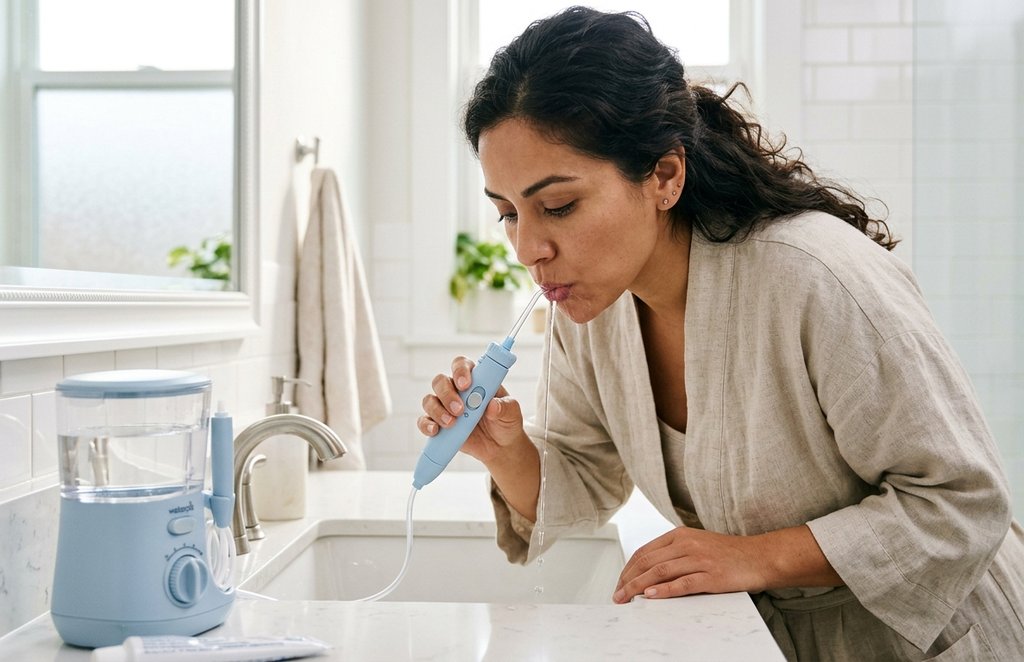
When using a water flosser, the reservoir should be filled with lukewarm water. It is advisable to start on the lowest pressure setting and increase it gradually as the gums adjust. Users should lean over the sink and aim the tip at a 90-degree angle to the gumline, moving methodically along both the outer and inner surfaces of the teeth.
Your dentist can demonstrate both to you at your next appointment and answer any questions you might have.
Which Device is Best for You?
When deciding which tool is right for you, you should consider your daily habits as well as your current oral health. For example, traditional string floss is often a strong fit for people with healthy gums and no complex dental work who already possess a consistent flossing habit. It is also the most practical option for travel or for situations where an electronic device is inconvenient.
However, those who struggle to floss every day may find that a water flosser helps close the gap in their routine. A water flosser can also be especially helpful for those with braces, clear aligner attachments, or fixed retainers, as traditional floss can be awkward to navigate around brackets and wires. People with dental implants, bridges, or crowns may also find that water irrigation reaches around restorations without snagging. Additionally, individuals with limited hand dexterity, such as those with arthritis, often find a water flosser easier to manage than manipulating thin strands of floss.
It should be noted that it is not always necessary to choose one tool over the other. For many patients, the most effective oral health strategy involves using both. String floss can physically break up the biofilm at the contact points, and a water flosser can then flush away the remaining debris and reach areas the floss cannot navigate comfortably. A common approach is to use string floss once daily for mechanical cleaning, then follow with an oral irrigator to rinse under bridges or orthodontic hardware.
Making the Decision with Help from Your Dentist
If you are not sure which device is best for you, your dental team can provide expert guidance based on your needs, lifestyle, and current oral health. For example, people with gum concerns, such as bleeding or recession, should consult their dental team for personalized recommendations based on their dental history.
Here at Yonge Eglinton Dental, our goal is to protect your smile in the long term, no matter which flossing device you use. We are here to help you achieve optimal oral health with professional dental service from our friendly team of experts.
Make an appointment with us today – you will be glad you did!
Explore Water Flosser vs. String Floss Options with our Dentists at Yonge and Eglinton
Contact Yonge Eglinton Dental when you are ready to optimize your oral health. We will work together to ensure your teeth and gums look great and are as strong and healthy as possible. Make an appointment for an office visit today by calling our office at 416-932-2222 or booking online. We look forward to seeing you!
Frequently Asked Questions About Water Flosser vs. String Floss
Can a water flosser replace string floss?
For many individuals, a water flosser is a convenient daily cleaning tool, especially when braces or dexterity issues make using string floss difficult. However, string floss is highly effective at the contact points between teeth, and many professionals recommend using both.
Is a water flosser better for braces?
Water flossers are often easier to use around brackets and wires because the water stream can reach areas that string floss may struggle to navigate.
Does a water flosser help with gum disease?
Water flossers can help reduce gum inflammation and bleeding when used consistently, though they are an addition to, and not a replacement for, professional care.
Will a water flosser cause discomfort if my gums are sensitive?
Most units feature adjustable pressure. Starting on the lowest setting allows the gums to adjust, and initial sensitivity typically improves with consistent, gentle use.
How often should I use a water flosser?
A reasonable goal is once daily, which aligns with the recommendation to clean between the teeth at least once a day.
How do I clean a water flosser?
Users should follow the manufacturer’s instructions for cleaning the reservoir and replacing the tips to ensure the device remains hygienic.
Do I still need to see the dentist if I use a water flosser daily?
Yes, professional cleanings are necessary to remove calculus and conduct regular exams, as home care cannot replace the specialized tools used by a hygienist.