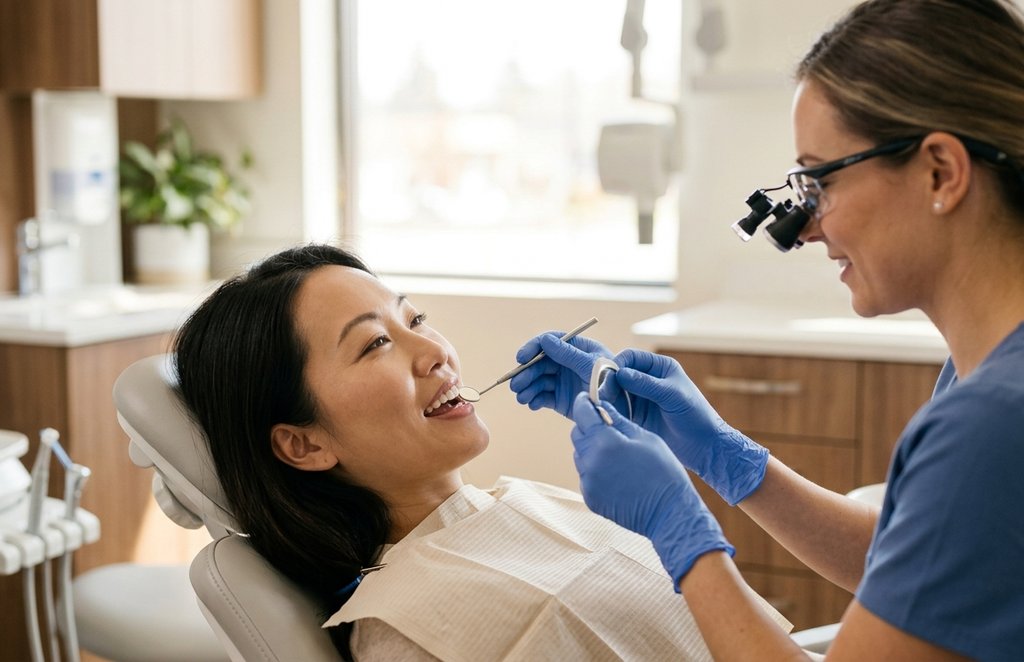


Most of the year, you manage your own dental health care by brushing twice per day, flossing before bed, and protecting your teeth from chips, cracks, and damage.
However, no matter how diligent you are with your at-home dental hygiene, you need the support of professional teeth cleaning at your dentist’s office to ensure your smile stays strong, healthy, and beautiful.
If you have not been to your dentist’s office in a long time and are curious about what to expect at your next visit, this article will provide the information (and incentive!) you need to make an appointment.
Why Professional Teeth Cleaning Matters
As mentioned, brushing and flossing to remove plaque from your teeth and gums are core to a complete at-home dental care routine. In reality, though, your toothbrush and floss cannot reach every area of your mouth equally well.
Plaque is a sticky film of bacteria that forms on teeth every day. If it is not completely removed, it can harden into tartar, which is also known as calculus. Unlike plaque, tartar cannot be removed with a toothbrush or floss alone. When tartar builds up on teeth, it creates a rough surface that traps more bacteria and contributes to gum disease and decay.
That is where professional teeth cleaning comes in. Your dental hygienist can remove buildup from areas that are difficult to clean at home, particularly around the gumline and between the teeth.
Think of a routine cleaning as preventive maintenance for your smile. It helps support healthy teeth and gums while giving your dental team an opportunity to identify small concerns before they become larger ones that require more extensive treatment.
Your Dental Hygiene Appointment: Friendly, Safe, and Comfortable
At Yonge Eglinton Dental, we prioritize your comfort whenever you visit our office, and do everything we can to help you relax and enjoy your time with us.
Here is what you can expect at your next dental hygiene appointment:
Check-In and Health Review
Your dental hygiene appointment usually begins with a quick conversation and an update to your health information. One of our dental hygienists will ask whether anything has changed since your last visit, including updates to your medical history or medications. This information helps us provide care appropriate to your individual needs.
This is also the perfect time to mention any dental health problems you have noticed, such as sensitivity to cold, a rough spot on a tooth, or bleeding gums when you brush. Remember, we are here to listen and help, so if you have any concerns, be sure to let us know.
The Initial Examination
Before the cleaning begins, the hygienist will examine your teeth and gums for areas that may need particular attention. This assessment will give us a clearer picture of your oral health and help guide the rest of your appointment.
Depending on your individual needs and dental history, X-rays may also be recommended to help us see areas between the teeth and below the gumline that are not visible during a regular visual examination.
Scaling: Removing Plaque and Tartar
Scaling is the central part of the dental cleaning process. This involves your hygienist carefully removing plaque and tartar buildup, particularly along the gumline and between the teeth.
The hygienist may use a hand scaler to gently remove buildup from the tooth surfaces, or an ultrasonic scaler that uses gentle vibrations and a water spray to help loosen and remove tartar. In some cases, both instruments might be used.
What Does Scaling Feel Like?
For most people, scaling involves mild sensations such as a light scraping or tickling feeling, along with the sound of the instrument. If an ultrasonic scaler is used, you may also notice a cool water spray.
Some areas can feel more sensitive than others, especially near the gumline or where buildup is more pronounced. If you are uncomfortable at any point, simply let your hygienist know. They can adjust their technique or pace to help make the experience easier for you.
Polishing for a Smooth, Clean Finish
Once the teeth have been scaled, your hygienist will usually polish them. This step is what many people associate with the classic fresh-from-the-dentist feeling.
A soft rubber cup or polishing tool is used with a mildly gritty polishing paste to smooth the surfaces of the teeth, giving plaque and bacteria less area to cling to. You may feel a gentle buzzing or tickling sensation and notice the slightly gritty taste of the polishing paste. When it is finished, your teeth often feel remarkably smooth.
Flossing and a Fresh Rinse
After scaling and polishing, your hygienist may floss between your teeth to remove any remaining particles or polishing paste. A final rinse helps clear your mouth and leaves you with that clean, refreshed feeling that makes a professional cleaning so satisfying.
Your hygienist may also point out any areas that could benefit from a different flossing technique or a little more attention at home. The goal is not to criticize your brushing or flossing habits, but rather to help you care for your teeth as effectively as possible between visits.
Optional Fluoride Application
Depending on your individual oral health needs, we may also recommend a fluoride treatment to help strengthen your tooth enamel. Fluoride application is not automatically necessary for every patient, and it is entirely your choice.
The application itself is quick and straightforward. We will be sure to explain how to care for your teeth afterward.
The Dentist’s Check and Oral Cancer Screening
After the hygiene portion of your appointment is over, the dentist typically examines your mouth for issues such as cavities, gum disease, loose fillings, broken teeth, infection, and other concerns that could affect your oral health. They may also perform an oral cancer screening through a careful visual and physical assessment of the soft tissues of the mouth.
Your dentist will discuss any findings with you, answer your questions, and explain any recommended next steps.
A Professional Cleaning Is a Simple Step Toward Better Oral Health
Whether your last dental cleaning was recent or it has been longer than you intended, the first step is simply booking the appointment.
At Yonge Eglinton Dental, we welcome the opportunity to clean your teeth, assess your oral health, answer your questions, and help you feel confident about caring for your smile.
When you are ready to book your next dental appointment, give our team a call. We are here to help you achieve and maintain the bright, beautiful smile you deserve!
Learn More About Professional Teeth Cleaning from our Dentists at Yonge and Eglinton
Contact Yonge Eglinton Dental when you are ready to optimize your family’s oral health. We will work together to ensure your teeth and gums look great and are as strong and healthy as possible. Make an appointment today by calling 416-932-2222 or booking online. We look forward to seeing you!
Frequently Asked Questions About Professional Teeth Cleaning
Does a professional teeth cleaning involve discomfort?
Most people experience only mild sensations during a routine cleaning, such as gentle scraping, tickling, cool water, or light buzzing. Some areas may feel more sensitive than others. Let your hygienist know if you are uncomfortable so they can adjust their approach or pace.
How long does a teeth cleaning appointment take?
The length of a dental hygiene appointment varies depending on your individual needs and the amount of care required. Your dental team can give you a better idea of what to expect when you book your appointment.
How often should you get your teeth cleaned?
The right schedule depends on your individual oral health, dental history, and your dental team’s recommendations. There is no one-size-fits-all interval for professional teeth cleaning.
Is professional teeth cleaning the same as a deep cleaning?
No. A routine cleaning removes everyday plaque and tartar buildup around and above the gumline. A deep cleaning, known as root planing, is a therapeutic procedure that can be used to treat gum disease.
Will my teeth be sensitive after a cleaning?
Some people notice temporary sensitivity after a professional cleaning, especially in areas where tartar buildup was removed. If you have concerns, let your dental team know so they can provide appropriate guidance.
What if I am nervous about my dental hygiene appointment?
Tell your dental team before your appointment or when you arrive. You can discuss ways to make the visit more comfortable, such as taking breaks when needed or using a hand signal to communicate with your hygienist.
Should I brush and floss before my dental cleaning?
Yes. Follow your normal brushing and flossing routine before your appointment. There is no need to scrub excessively or try to make your teeth look perfect before you arrive. Your dental team is there to provide care and guidance, not to judge your home routine.