
Deciding to straighten your teeth is a significant step in improving the look of your smile. Whether you want to correct tooth crowding, spacing, or bite concerns, Invisalign is a safe, popular treatment that helps you achieve the smile of your dreams. Best of all, unlike braces, Invisalign aligners are virtually unnoticeable, but people will definitely notice the results!
However, before starting your Invisalign journey, it is important to understand the process to help make the experience feel more manageable. In this article, we take you step by step through the entire process to help you make an informed decision about moving forward with Invisalign.
Step 1: Your Initial Invisalign Consultation
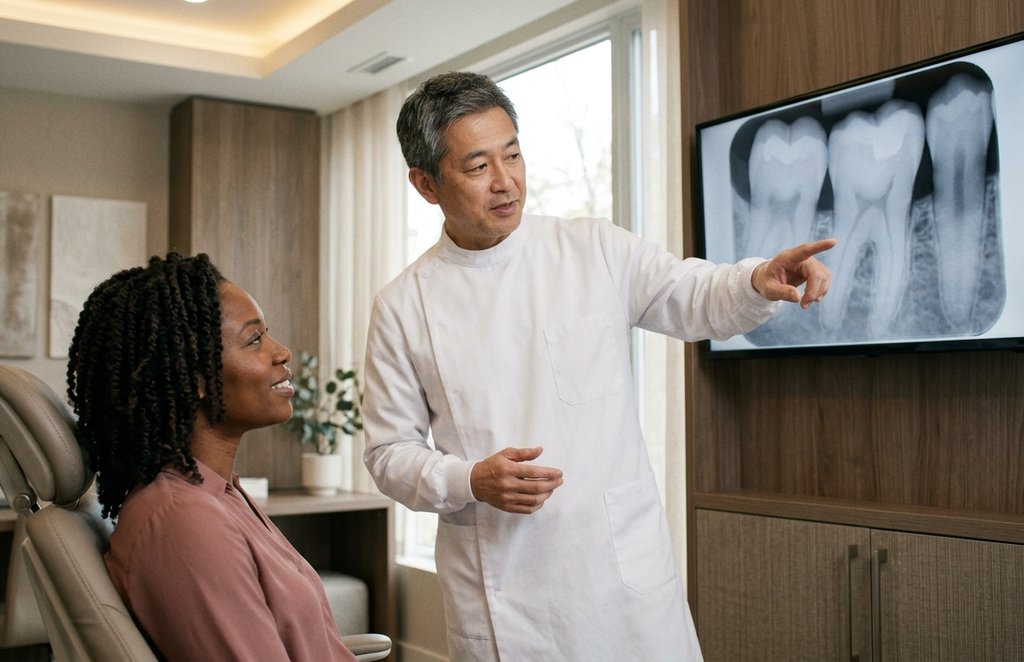
A consultation with your dentist is the first step in every successful Invisalign treatment. During this consultation, your dentist will examine your teeth, gums, and bite to detect any active issues, such as tooth decay or gum disease, which typically needs to be addressed before Invisalign treatment begins. If you have complex jaw or bite problems, your dentist might recommend traditional braces before starting Invisalign for the best possible outcome.
You and your dentist will also discuss what you would like to improve about your smile to tailor the treatment plan accordingly. Finally, your dentist will explain how Invisalign will affect your lifestyle, as patient commitment plays a major role in treatment success.
Step 2: 3D Digital Scans and Treatment Planning
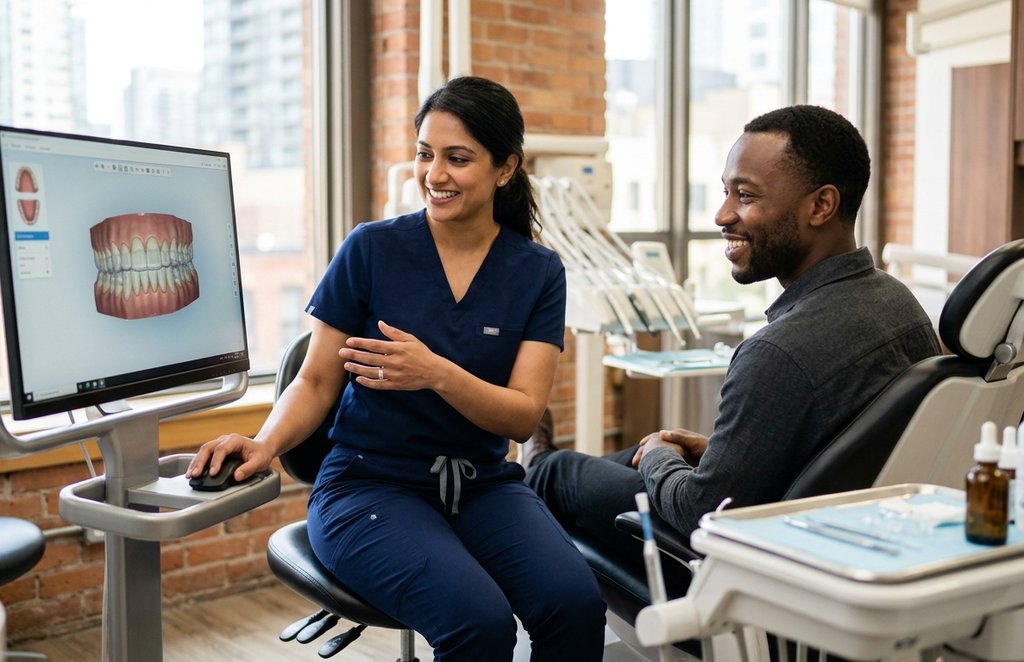
Once you are approved for Invisalign treatment, the next step is to create a highly detailed digital model of your teeth using advanced intraoral scanners, such as the 3Shape system. This technology captures precise images of your teeth in seconds, creating a 3D model that becomes the foundation of your Invisalign treatment plan.
Using specialized software, your dentist maps out every planned tooth movement, determining exactly how your teeth will shift and how many aligners Invisalign will require to reach the desired result. For example, some treatment plans involve only a small series of trays used over several months, while others require 30 or more trays that can take more than a year to complete. The number of trays and the duration of the treatment will vary depending on the complexity of your situation.
One of the most exciting parts of this stage is the opportunity to view a digital simulation of how your Invisalign smile may look once treatment is complete. This gives you something tangible to look forward to!
Step 3: Receiving Your First Invisalign Aligners
After your custom Invisalign aligners are fabricated from your 3D scans, you will return to the office for your fitting appointment. This step allows your dentist to ensure the first aligners fit properly, provide instructions on how to insert and remove them correctly, and detail the recommended wear time and when to switch to the next set of trays in your series, often every one to two weeks.
The first few days with Invisalign may cause you to feel mild pressure or tightness in your teeth. These sensations usually indicate that the aligners are beginning to move your teeth as intended, and tend to subside as the mouth adjusts.
You may also notice a slight change in speech, particularly a mild lisp, which typically resolves quickly as your tongue adapts to the aligners.
If you experience sensitivity, cold water and over-the-counter remedies may help. However, ongoing discomfort should always be discussed with your dentist.
Step 4: Daily Life with Invisalign
Unlike braces, Invisalign aligners are removable, making them one of the most popular choices for improving smiles. However, this flexibility also means the responsibility for staying on track and following your dentist’s instructions rests with you.
Invisalign recommends wearing aligners approximately 20 to 22 hours per day. Teeth only move when the aligners are in place, so wearing them below the recommended duration can delay progress and increase the likelihood of requiring refinements later.
You should remove your aligners whenever you eat or drink anything other than water to help prevent staining and reduce the risk of cavities developing beneath the trays. Hot beverages such as coffee and tea can also warp the plastic.
Keeping your aligners clean is also critical. Rinse them whenever you remove them, and clean them gently with a soft toothbrush using clear, unscented soap or a dedicated aligner cleaner. Avoid hot water and abrasive toothpaste, which can damage the plastic.
Be sure to brush and floss your teeth before reinserting your aligners to help keep both your teeth and trays clean.
One simple habit can save considerable frustration: always store your aligners in their protective case. Many trays disappear after being wrapped in napkins during meals or left behind in lunchrooms and restaurants.
What Happens If You Lose an Aligner?
If you lose an aligner, contact your dental office as soon as possible. Depending on where you are in your Invisalign treatment sequence, your dentist may recommend returning to your previous tray, moving to your next aligner slightly earlier than planned, or ordering a replacement.
It is critical not to make the decision yourself. Skipping ahead without professional guidance can interfere with treatment progress and affect how future trays fit.
A useful tip is to keep your previous aligner as a handy backup after switching to a new one in case any problems arise.
Step 5: Understanding Invisalign Attachments and Interproximal Reduction (IPR)
In some cases, Invisalign treatment also involves additional tools to help achieve more precise tooth movements.
For example, your dentist may recommend using Invisalign attachments. These small, tooth-coloured composite shapes are bonded to selected teeth, providing the aligners with additional grip to guide more complex movements, including rotations and vertical adjustments.
Although attachments may be visible at close range, they generally blend well with the natural colour of your teeth. More importantly, they do not damage the tooth surface and are removed once the treatment is complete.
Some patients may also require interproximal reduction, commonly known as IPR. During this procedure, a very small amount of enamel is polished between specific teeth to create the space needed for proper alignment. It is a safe procedure that is typically performed early in the treatment when necessary.
Not every Invisalign treatment requires attachments or IPR, but, when required, they can play a critical role in achieving predictable results.
Step 6: Progress Check-Ins and Refinements
Throughout your Invisalign treatment, you will need to attend periodic check-in dental appointments to ensure your teeth are moving as planned and that your aligners continue to fit properly. In most cases, these appointments are solely focused on your aligners and will not involve teeth cleaning, scaling, or other routine dental procedures.
If additional adjustments are needed, your dentist may recommend refinements. Refinements are extra aligners created after your initial series to fine-tune tooth positions and improve the final result. They are a routine part of Invisalign treatment for many patients and should not be viewed as a setback. In fact, refinements are often what transform a good result into an excellent one!
Step 7: Retainers and Protecting Your New Smile
Completing Invisalign treatment is an exciting milestone, but it is not quite the end of the journey. That is because teeth naturally shift over time and may even move back toward their original positions, a phenomenon known as orthodontic relapse.
Retainers help preserve the results you worked so hard to achieve. Your dentist will present several different retainer options and provide a personalized wear schedule. Over the long term, many patients wear retainers at night indefinitely to maintain their alignment and protect their investment in their smile for years to come.
If you are considering a smile makeover with Invisalign, make an appointment with the team at Yonge Eglinton Dental to discuss your options. We are here to help you achieve the picture-perfect smile you deserve!
Explore Invisalign Treatment with Help from our Dentists at Yonge and Eglinton
Contact Yonge Eglinton Dental when you are ready to optimize your oral health. We will work together to ensure your teeth and gums look great and are as strong and healthy as possible. Make an appointment today by calling 416-932-2222 or booking online. We look forward to seeing you!
Frequently Asked Questions About Invisalign
How long does Invisalign treatment take?
Treatment length varies significantly depending on the complexity of your case. Some Invisalign treatment plans last only a few months, while others extend beyond a year. Your dentist can provide a more accurate estimate after completing your digital scan and treatment plan.
Will Invisalign affect my speech?
Some patients notice a mild lisp during the first few days of treatment. This usually disappears quickly as the tongue adapts to the aligners.
Can I drink coffee while wearing Invisalign aligners?
No. Aligners should be removed before drinking coffee, tea, or any beverage other than water. Hot drinks can warp the trays, and dark beverages may stain them.
What happens if I do not wear my aligners enough?
Insufficient wear time can cause your teeth to fall behind the treatment plan. This may extend treatment and increase the likelihood of needing refinements.
Do Invisalign attachments damage teeth?
No. Invisalign attachments are made from tooth-coloured composite material and are removed at the end of treatment without affecting the underlying enamel.
How often will I need check-up appointments?
The frequency of appointments varies by case. Most patients attend periodic progress checks throughout treatment so their dentist can monitor tooth movement and provide additional aligners as needed.
How long will I need to wear retainers after Invisalign?
Retainers are a long-term part of maintaining your results. Many patients eventually wear them only at night, but ongoing retainer use is essential to prevent teeth from shifting.